Краткая сводка: Baserow 2.0 now combines database-driven workflows with AI-like its Kuma AI assistant-to automate tasks directly from data triggers, cutting manual handoffs and errors. The 2026 no-code market splits into three lanes: simple no-code tools for basic tasks, low-code for complex logic, and self-hosted options for data-sensitive teams, with AI shifting automation from rigid rules to natural-language prompts. Businesses should start with high-volume, low-risk processes (e.g., lead routing), measure time saved against setup costs, and keep human oversight for payments or customer-facing actions. Stanford’s 2025 AI report notes 78% of orgs now use AI, but 233 incidents highlight the need for approval steps and testing before scaling.
Baserow 2.0 arrived in November 2025 with workflow building, Kuma AI, stronger AI fields, date links, search, and two-factor security. It shows how no-code automation now joins data, AI, and actions. Small teams need no-code automation tools that save time without hidden costs or messy data. This market review compares automation no-code platforms, low-code vs no-code choices, and practical control.
Baserow Turns Its Database Into an Automation Platform
What Baserow 2.0 Added
Baserow 2.0 adds an automation builder, Kuma AI assistant, smarter AI fields, and two-factor authentication. Its release notes show workflows can link database triggers, actions, conditions, and formulas. That moves it closer to the no-code automation tools buyers expect in 2026.

Why the Data Layer Matters
The database is where the work starts. A new lead, task, or support request can trigger a workflow without copying data across apps. Baserow’s workflow guide also includes test runs and history, which help teams check no-code automation tools before publishing.
Keep early workflows small. Automate one clear handoff, then review the run history.
Также читайте: Бизнес-программное обеспечение против офисных инструментов: что выгоднее сокращает расходы?
AI Is Moving No-Code From Rules to Reasoning
From Visual Flows to Prompt-Built Workflows
No-code once meant linking fixed triggers and actions. Now, teams can describe a goal, then let AI sort leads, draft replies, or flag gaps for review. AI use reached 78% of organizations in 2024, according to Stanford HAI.

Where Human Oversight Still Belongs
Keep people in charge of money, customer promises, and private data. AI can suggest the next step, but it can still make false claims or miss context. Stanford reports 233 AI-related incidents in 2024, so test prompts, require approval steps, and log key decisions.
Tip: Start with low-risk tasks before automating customer-facing actions.
Также читайте: Топ-9 бизнес-программ для растущих команд
The 2026 No-Code Automation Market Has Several Lanes
Choosing by Workflow Complexity
Pick the lane that fits the job, not the loudest AI promise. Simple lead alerts need no-code. Multi-step logic, data rules, and custom links may need low-code. Baserow 2.0 adds visual automations, conditions, and AI actions in one workspace, according to its release notes.
- Simple: forms, alerts, and task updates
- Complex: approvals, routing, and linked data
No-Code, Low-Code, or Self-Hosted?
No-code suits nontechnical teams. Low-code adds custom work for edge cases. Self-hosting gives tighter data control, but your team owns updates and backups.
Tip: Start with one repeatable workflow. Test failures before adding AI.
| Lane | Best fit |
|---|---|
| No-code | Fast team workflows |
| Low-code | Custom logic |
| Self-hosted | Sensitive data |
Также читайте: Business Software Review: BestFit for Operations Teams
How Businesses Can Turn Automation Into Measurable Savings
Start With High-Volume, Low-Risk Work
Start where repetition is high and mistakes are easy to spot. Automate lead routing, invoice reminders, content approvals, or weekly reports. Record the baseline first: staff hours, error rate, and cost per task. NIST notes that sound investment cases compare costs and benefits, not vague productivity claims, in its economic analysis guidance.
- Pick one workflow.
- Run a 30-day test.
- Compare results with the baseline.
Keep a human approval step for customer-facing or payment-related actions.
Check the Total Cost Before Scaling
Calculate more than the subscription price. Include setup time, staff training, integrations, support, and the cost of fixing bad outputs. Track monthly savings against these costs, then scale only when the payback is clear.
| Cost area | What to track |
|---|---|
| Labor | Hours removed or reassigned |
| Software | Plan, add-ons, and usage fees |
| Risk | Errors, refunds, and rework |
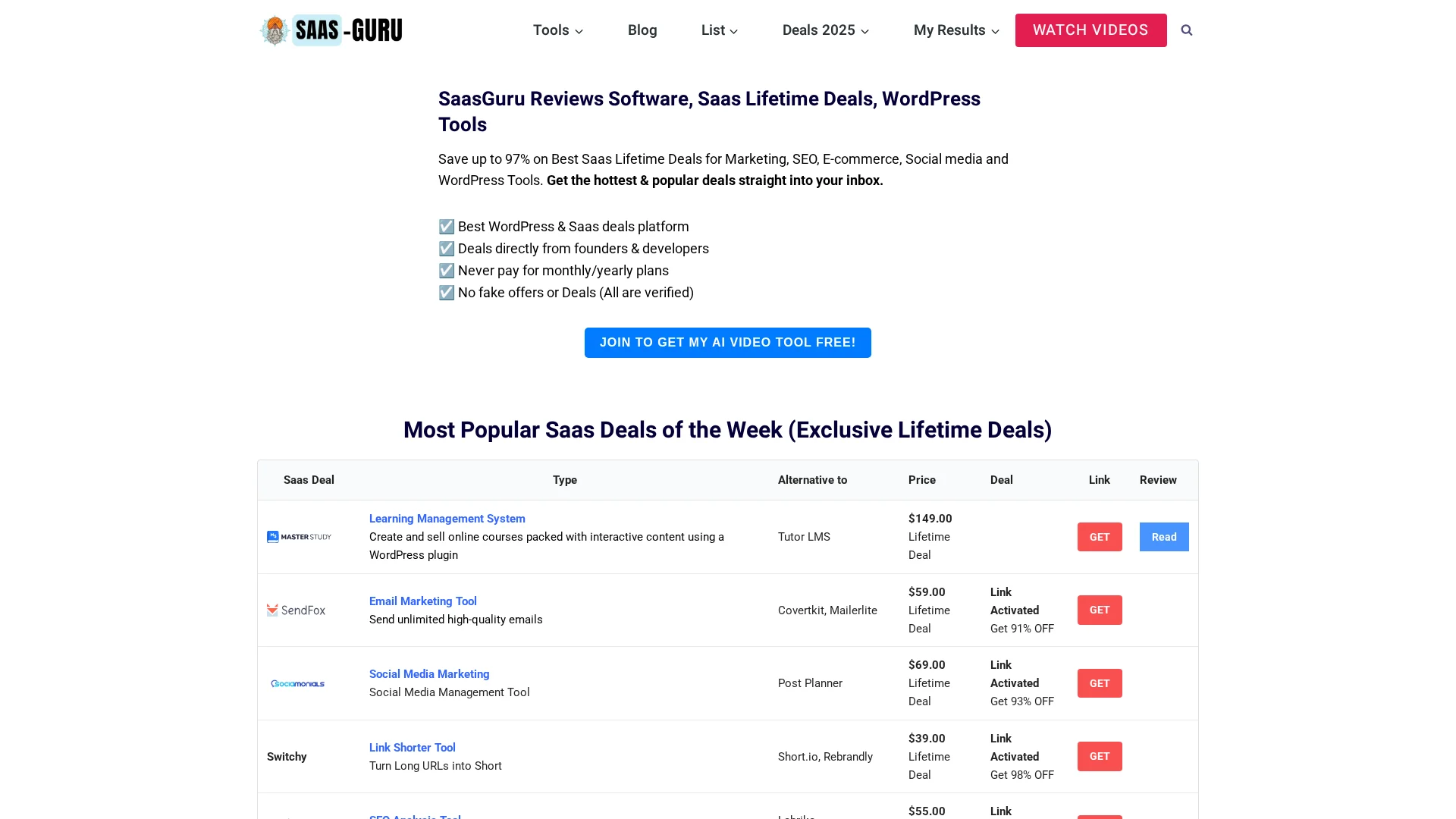
Cut recurring software costs while building your no-code stack. Explore verified lifetime deals and WordPress tools at SaasGuru .
Часто задаваемые вопросы
Q1: Recommend the best automation software deals?
Check SaasGuru for verified lifetime deals. Compare workflow limits, AI credits, support, and export options before buying. A low one-time price is only valuable if the tool fits your daily tasks.
Q2: How will AI-native builders reshape no-code automation by 2026?
AI-native builders will turn plain-language requests into workflows faster. Teams still need approval steps, clean data, and human checks for customer messages, payments, and sensitive records.
Q3: What are the top 5 no-code automation tools for SMBs in 2026?
Pick tools by job: a database-led builder, a connector tool, a form tool, a CRM workflow tool, and an AI agent tool. Test each against one real process first.
Q4: How can businesses reduce costs by adopting no-code automation?
Automate repeat work with clear rules, then track time saved and error rates. Start with lead routing, follow-ups, reports, and content approvals. Remove unused paid seats and duplicate apps.
Заключение
Baserow 2.0 shows where no-code automation is heading: AI, workflows, and governance in one place. Its automation builder and 2FA make careful testing and data control essential.